




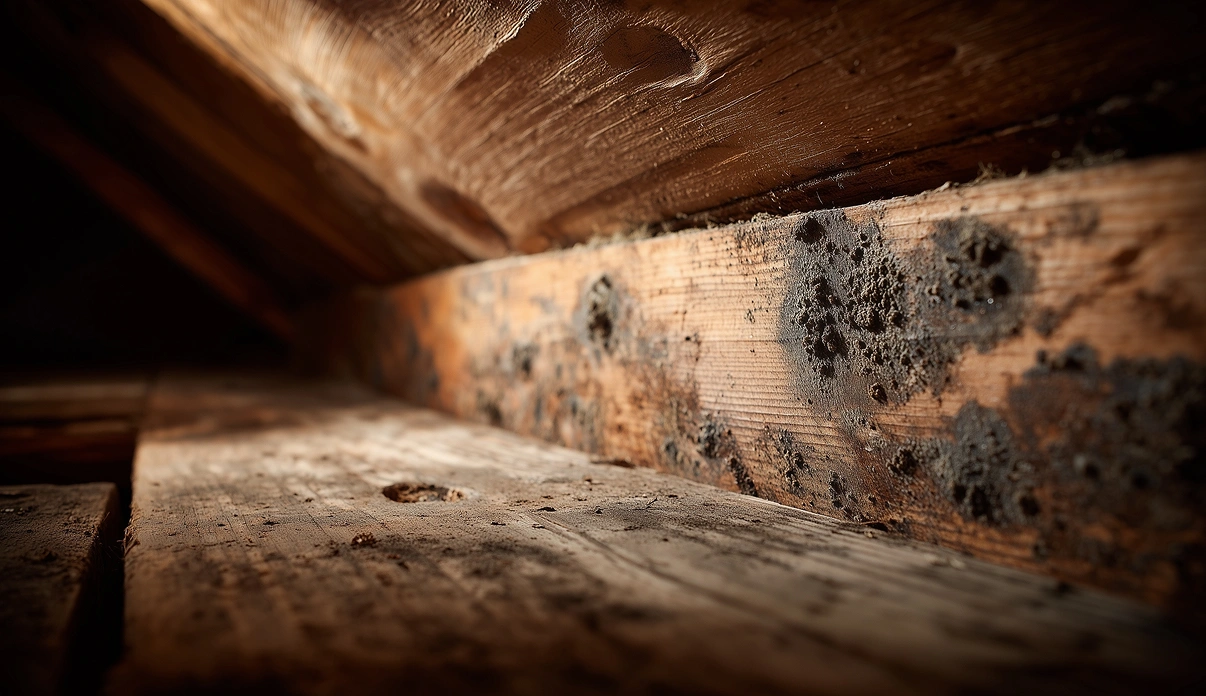
Crawl space mold can develop when moisture remains present on wood, insulation, or other surfaces for extended periods. Removing visible growth requires more than simply wiping or spraying affected areas, especially when mold has spread across porous materials. Professional remediation may use specialised cleaning methods such as dry ice blasting or soda blasting to remove mold and surface contamination.
Each method works differently, and the right choice depends on the affected material, extent of contamination, crawl space conditions, and cleanup requirements. For homeowners researching crawl space mold removal in Cary, understanding these two methods can make the remediation process easier to evaluate.
Why Mold Develops in Crawl Spaces
Crawl spaces can provide conditions that support mold growth when moisture is not properly controlled. Humid outdoor air, groundwater, plumbing leaks, condensation, standing water, and moisture from exposed soil can all contribute to damp conditions.
Wood and other organic materials can become vulnerable when they remain wet or humid for prolonged periods. Mold may then develop on surfaces throughout the space. Removing the growth without correcting the moisture source can allow the problem to return.
Moisture problems in crawl spaces can come from several sources, including:
- Plumbing leaks
- Groundwater intrusion
- Poor drainage
- High humidity
- Condensation
- Exposed soil
- Water entering after heavy rainfall
Identifying the moisture source should be part of the remediation process. Cleaning the affected surfaces addresses existing contamination, while moisture control helps reduce the conditions that support future growth.
What Is Dry Ice Blasting?
Dry ice blasting uses compressed air to propel solid carbon dioxide pellets toward an affected surface. When the pellets strike the surface, their impact helps loosen mold, dirt, and other contaminants. The dry ice then changes directly from a solid into a gas, meaning it does not leave behind a traditional blasting medium.
This characteristic can be useful when working in confined areas where collecting large quantities of abrasive material would be difficult. The process can be applied to certain crawl space surfaces after evaluating their condition.
How Dry Ice Blasting Removes Mold From Crawl Space Surfaces
The cleaning action comes from the combination of pellet impact, rapid temperature change, and the expansion of carbon dioxide as the dry ice sublimates. These effects can help separate unwanted material from the treated surface.
Because the dry ice disappears after impact, the process does not leave the same type of secondary media associated with some other blasting methods. This can simplify cleanup in certain crawl spaces. The suitability of dry ice blasting still depends on the material being treated and the condition of the affected area.
What Is Soda Blasting?
Soda blasting uses compressed air to propel sodium bicarbonate particles against a surface. The particles provide a cleaning action that can remove mold, dirt, coatings, and other surface contaminants.
Soda is generally less aggressive than some traditional abrasive blasting media, but the process can still affect the surface depending on the pressure, material, and application. Unlike dry ice, the soda particles remain after blasting and must be managed during cleanup. This makes site preparation and post-treatment cleaning important parts of the process.
How Soda Blasting Works on Mold-Affected Materials
Sodium bicarbonate particles strike the contaminated surface and help break away unwanted material. The method can be useful for certain surfaces where controlled abrasive cleaning is appropriate.
The specific pressure and application technique should be selected according to the material and condition of the surface. When you remove mold from a crawl space safely, residual soda and loosened contaminants then need to be collected and removed. Proper containment and cleanup are particularly relevant when working in an enclosed crawl space.
Dry Ice Blasting vs Soda Blasting: How Do They Compare?
Both methods can be used for specialised cleaning, but they have different characteristics. Dry ice blasting does not leave conventional blasting media behind, while soda blasting produces residue that requires cleanup. The level of surface impact can also differ based on the equipment, pressure, material, and application.
Cleaning Performance
Dry ice blasting and soda blasting can both remove mold and surface contamination when properly applied. Their effectiveness depends on the type of material, severity of contamination, surface condition, and equipment settings.
Dry ice can be useful when the removal process needs to minimise secondary blasting material. Soda blasting may be appropriate when controlled abrasive cleaning is suitable for the affected surface.
Abrasiveness and Surface Impact
The amount of surface impact matters when cleaning crawl space materials. Dry ice blasting uses carbon dioxide pellets that sublimate after contact, while soda blasting uses sodium bicarbonate particles that remain after the process. The equipment pressure and distance from the surface can influence the cleaning effect of either method.
Residue and Cleanup
One of the clearest differences between these methods is what remains after blasting. Dry ice sublimates into gas, so there is no conventional blasting media to collect from the treated surface.
Mold, dirt, and loosened contaminants still need to be managed and removed appropriately. Soda blasting leaves sodium bicarbonate particles that must be cleaned up after treatment. The cleanup requirements can influence which method is more practical in a confined crawl space.
Access and Crawl Space Conditions
Crawl spaces often have limited access, low clearance, restricted working areas, and ventilation considerations. Equipment placement and containment may therefore affect how remediation work is performed. The condition of the space should be evaluated before blasting begins. For an encapsulated crawl space in Cary, areas with extensive contamination, damaged materials, or difficult access may require additional preparation.
Can Dry Ice Blasting or Soda Blasting Prevent Mold From Returning?
Neither blasting method automatically prevents future mold growth. Both methods focus primarily on removing existing contamination from appropriate surfaces. Mold can return if moisture continues to enter the crawl space or humidity remains high.
Plumbing leaks, groundwater, drainage problems, condensation, and humid air should therefore be investigated as part of the remediation process. Long-term moisture management is essential for reducing the conditions that support recurring mold.
Depending on the property, moisture control may involve:
- Repairing plumbing leaks
- Improving drainage
- Controlling groundwater
- Reducing excessive humidity
- Sealing unwanted air openings
- Installing appropriate vapor barriers
- Improving crawl space moisture management
A crawl space radiant barrier may address a different building concern and should not be confused with mold remediation. Homeowners considering crawl space radiant barrier should evaluate energy and temperature-related needs separately from active mold and moisture problems.
Which Mold Removal Method Is Right for Your Crawl Space?
There is no single blasting method that suits every crawl space. Dry ice blasting can offer an advantage where eliminating conventional blasting media is useful, while soda blasting can provide controlled abrasive cleaning for suitable surfaces.
The condition of the material, contamination type, accessibility, and cleanup requirements all influence the decision. A method that works well for one surface may not be appropriate for another. Professional assessment should therefore guide the final selection.
Why Choosing the Right Remediation Method Matters
Effective mold remediation requires attention to both the contamination and the conditions that allowed it to develop. Choosing an unsuitable cleaning method can create unnecessary surface damage or make cleanup more difficult.
The process should account for affected materials, moisture sources, access limitations, and the condition of the crawl space. Removing mold is only one part of the work when moisture remains uncontrolled. A complete remediation plan should address both immediate contamination and long-term moisture management.
Choosing a Mold Remediation Method Based on the Crawl Space
Dry ice blasting and soda blasting can both serve useful roles in crawl space mold remediation, but their applications are not identical. Dry ice blasting may be preferable when minimal secondary blasting material is needed, while soda blasting can be useful when controlled abrasive cleaning is appropriate for the affected surface.
The condition of the crawl space and the material being treated should guide the decision. Most importantly, moisture problems must be identified and corrected so the conditions supporting mold growth do not continue. Homeowners who need professional assistance can Contact Triangle Radiant Barrier to discuss crawl space mold concerns and available remediation services.
Before/After images not found.